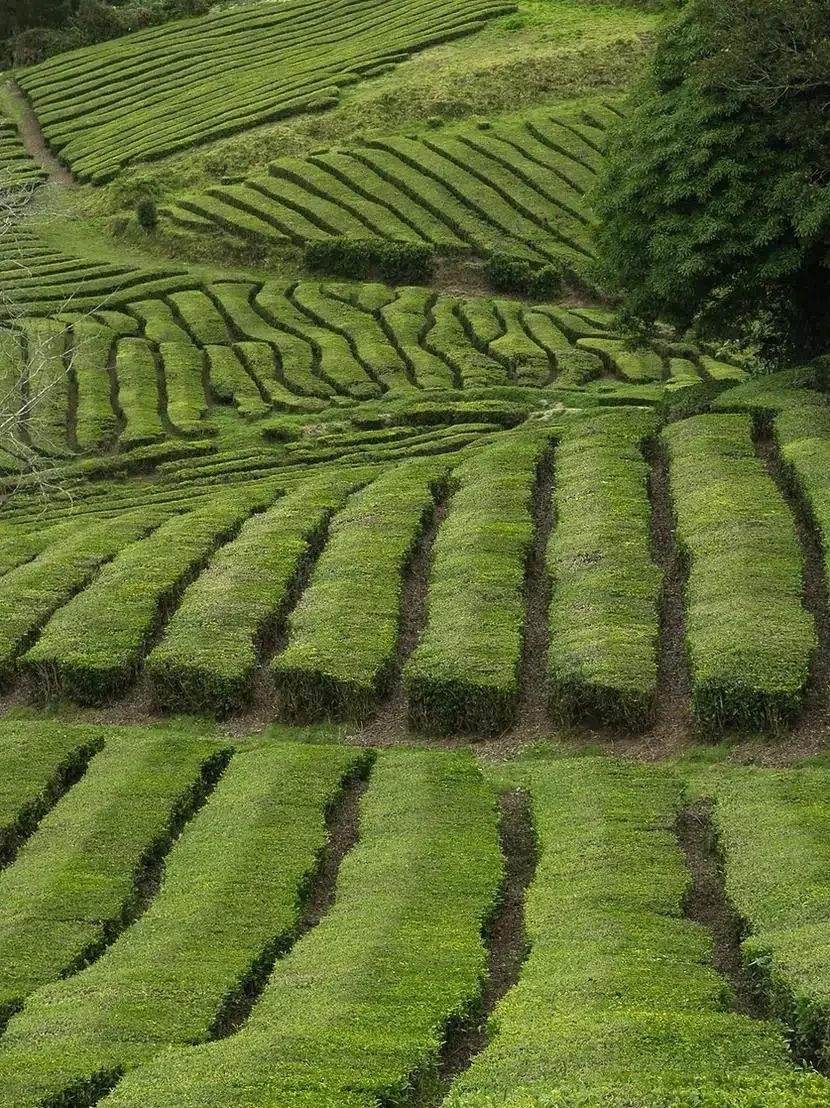
People everywhere have steeped leaves, flowers and roots in water, for medicine, for welcome, for company. Africa has done it for generations: rooibos in South Africa, bissap (Folere), the hibiscus drink, in Cameroon.
When the tea plant traveled out of southwest China along the trade routes, it landed in a world already full of cups. Morocco poured it with mint, from a height, for every guest. Senegal stretched it into attaya, three rounds long, built for conversation. Japan made it discipline. India put it on every corner as chai. Caribbean grandmothers kept their bush tea for every mood and passed the knowledge hand to hand.
Follow any of those cups back and you find the same scene: a pot on the heat, a seat pulled up, a reason to stay a little longer. Tea never needed a shared language. It needed a kettle, a cup, and someone to hand it to. It slows the room down, makes space for the question that doesn't fit in a rush, and turns a stranger into a guest. Across every culture the pattern holds: when people want to connect, they drink tea.