
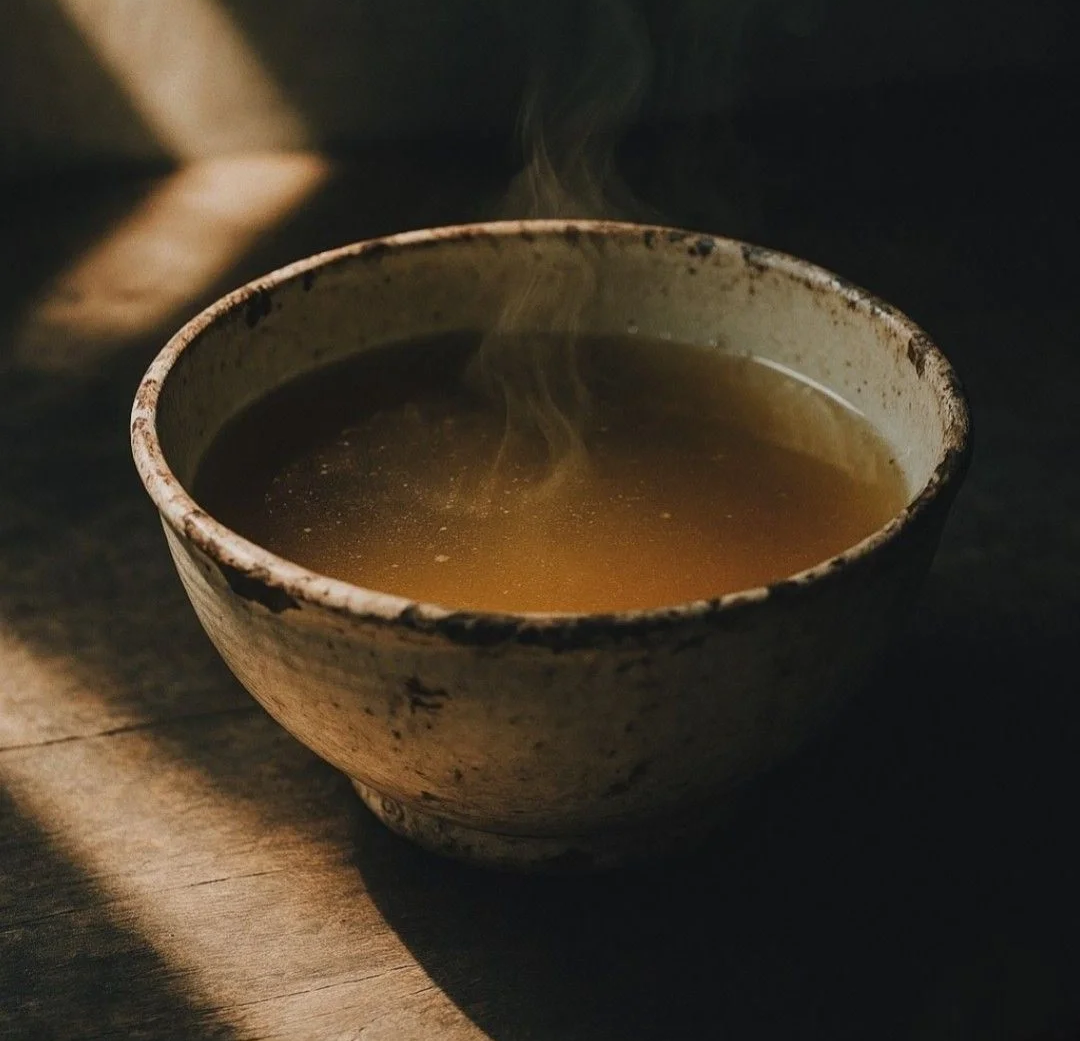
Herbal tea has long been linked with healing and rest. Modern science is still studying its effects, but much of what was known generations ago, from African kitchens, to the tea rooms of Japan, and the spice markets of India , still holds true today. The benefits begin with what herbal tea is made from: not a single leaf, but whole roots, flowers and herbs steeped together and taken in full.
RICH IN PLANT COMPOUNDS
Herbal tea is naturally rich in antioxidants, including flavonoids, phenolic acids and aromatic oils. The aromatic oils are what give each herb its signature scent. Researchers testing brewed teas found that infusions like chamomile and hibiscus are rich in these polyphenolic, antioxidant compounds (Shannon, Jaiswal, & Abu-Ghannam, 2017). Because several herbs are often blended into one cup, herbal tea brings many of these compounds together at once.
COMFORTABLE DIGESTION
Many of the world’s oldest herbal remedies were made for the stomach. Ginger, fennel, peppermint and cardamom have been steeped after meals for centuries, from Ayurvedic kitchens in India to the herbal traditions of the Caribbean. Ginger is the most studied of these. In a randomized, double-blind trial, ginger helped the stomach empty more efficiently than a placebo (Hu et al., 2011). Fennel and peppermint have long been used to ease bloating and help the digestive tract relax, which is why a warm cup after dinner has always felt like relief.
CALM, RESTFUL EASE
Herbal tea is naturally caffeine-free and is often made with calming botanicals like chamomile, lemon balm and valerian root. Blended together, these herbs support a more settled, unhurried state without the jolt or crash of caffeine. In a randomized controlled trial, people who drank chamomile tea daily for two weeks reported better sleep quality than those who didn’t (Chang & Chen, 2016).
A DAILY RITUAL
Beyond what can be measured, herbal tea invites a slow, deliberate practice. Making a cup (pouring, steeping, breathing in the steam) is itself a small way of coming back to yourself. For many, it is the most consistent part of the day.
